
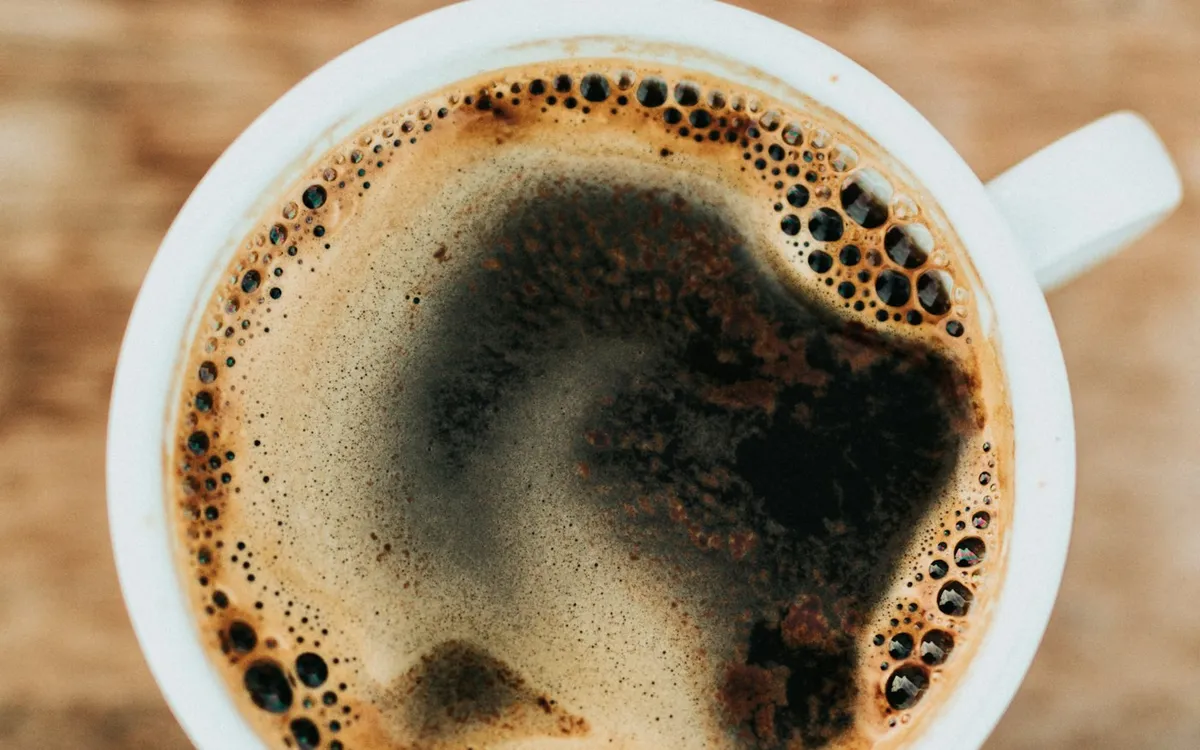
An excerpt from Chapter 13 of the book Mastering the Bean.
Extraction is the conversation between water and coffee. The brewer's job is to set the conditions for that conversation to produce something extraordinary.
Coffee extraction is the process by which water dissolves soluble compounds from ground coffee. The beverage in your cup is approximately 98–99% water and 1–2% dissolved coffee solids — yet within that 1–2% lies an astonishing complexity of acids, sugars, melanoidins, lipids, and aromatic compounds that determine the entire sensory experience.
Not all compounds in ground coffee are equally soluble or extract at the same rate. In general, lighter, more volatile compounds (fruity acids, floral aromatics) extract quickly; heavier, more complex compounds (melanoidins, roasty compounds) extract more slowly. Bitter and astringent compounds tend to extract last. This creates a temporal structure to extraction: an under-extracted cup tastes thin and sour (only the fast-extracting acids have been pulled out); a properly extracted cup has sweetness, complexity, and balanced acidity; an over-extracted cup is bitter and astringent (the late-extracting unpleasant compounds dominate).
How we measure extraction
The key metrics of extraction quality are Extraction Yield (EY) and Total Dissolved Solids (TDS). EY — expressed as a percentage — tells you how much of the coffee's dry weight has been dissolved into the brew. TDS — expressed in percentage or as grams per liter — tells you how much dissolved material is present in the final cup. Together, these two numbers locate the brew on the Brewing Control Chart, a framework developed by Dr. Ernest Lockhart at MIT in the 1950s and refined by the SCAA.
The Brewing Control Chart plots TDS (vertical axis, indicating strength) against Extraction Yield (horizontal axis, indicating extraction degree). The 'Ideal Zone' — the area associated with optimal coffee quality according to consumer preference research — is typically defined as 1.15–1.45% TDS for filter coffee and 18–22% extraction yield.
Coffees plotting to the left of the Ideal Zone (low EY) are under-extracted: they taste sour, thin, and sharp, lacking sweetness and complexity. Coffees plotting to the right (high EY) are over-extracted: bitter, astringent, and harsh. Coffees plotting above the zone (high TDS) are too strong; below (low TDS) are too weak. A coffee can plot in the Ideal Zone by strength but still be under- or over-extracted — which is why both axes must be considered simultaneously. And remember: two coffees with identical TDS and extraction yield can taste very different — a washed Ethiopian and a natural Yemeni at identical extraction will have completely different flavor compositions. The Brewing Control Chart is a diagnostic tool, not a recipe.
Modern refractometers — devices that measure the refractive index of a liquid to calculate TDS — have made quantitative extraction analysis accessible to coffee professionals. Brands like Atago and DiFluid produce coffee-specific refractometers with extraction yield calculators built in. Once you know TDS and coffee dose, extraction yield is easily calculated: Extraction Yield (%) = (TDS × Brew Weight) / Dose Weight. The ability to measure extraction accurately, rather than relying purely on sensory impression, allows for more systematic troubleshooting and dialing-in.
The brewing variables
Grind size
Grind size is the most immediately impactful variable in brewing: it determines the total surface area of ground coffee exposed to water, which directly controls extraction rate. Finer grind = more surface area = faster extraction = potentially over-extracted if not adjusted. Coarser grind = less surface area = slower extraction = potentially under-extracted if not adjusted.
Different brew methods require different grind sizes. Espresso uses a very fine grind (roughly 200–300 µm) because the brew time is only 25–35 seconds and the water must extract efficiently under pressure. Filter methods (pour-over, V60, Chemex) use a medium-coarse grind because water contact time is 2–4 minutes. Immersion methods (French press, cupping) use a coarse grind because the coffee is fully immersed in water for 4+ minutes. Cold brew uses an extremely coarse grind because extraction occurs over 12–24 hours at low temperature.
Grinder burr quality is critical to consistency. Blade grinders produce uneven particle distributions — a wide range of sizes from coarse chunks (boulders) to dust — causing simultaneous under-extraction of coarse particles and over-extraction of fines, producing a cup that is simultaneously sour and bitter — confusing and difficult to diagnose. Flat burr and conical burr grinders produce much more uniform distributions, allowing predictable, consistent extraction. Grind distribution is as important as the mean grind size.
Water temperature
Water temperature affects both extraction rate and the types of compounds extracted. Higher temperatures extract more total dissolved solids faster, but also extract more bitter and astringent compounds. Lower temperatures extract more slowly and selectively, often producing brighter, sweeter cups — the principle behind cold brew's characteristic sweetness and low bitterness.
The SCA recommends a water temperature of 90.5–96°C (195–205°F) for filter brewing. Within this range, lighter roasts benefit from higher temperatures (94–96°C) to fully extract the complex acids and sugars that require more energy. Darker roasts — which are more soluble and contain more readily extractable bitter compounds — benefit from lower temperatures (90–92°C) to avoid intensifying their bitterness. Espresso is typically brewed at 90–93°C machine temperature, with the actual temperature at the coffee puck being slightly lower.
Water chemistry matters just as much — we cover it in detail in “Water: the invisible ingredient in coffee”.
Brew ratio
Brew ratio — the ratio of ground coffee to water used — determines the potential strength of the resulting beverage. It is typically expressed as a decimal ratio (1:15 meaning 1g of coffee per 15g of water) or as a percentage. For SCA-standard filter coffee, the guideline is 55–60g of coffee per liter of water (approximately 1:16–1:18).
However, brew ratio is not simply a strength dial. Changes in brew ratio while keeping other variables constant also change extraction: using less coffee (higher ratio, e.g., 1:18) with the same grind and brew time will produce a slightly higher extraction yield than using more coffee (lower ratio, 1:14). This is because the higher water volume per gram of coffee achieves a more complete extraction of available solids.
Dialing in espresso
Espresso dialing-in is the iterative process of adjusting grind, dose, yield, and temperature until the extraction produces the desired flavor profile. It is a systematic process, not a guessing game. The standard approach is to fix two variables and adjust the third, evaluating the result after each change.
A practical starting point for espresso dial-in: Begin with a 1:2 ratio (18g dose / 36g yield), a target time of 28–32 seconds, and a temperature of 92°C. If the shot tastes sour (under-extracted), grind finer — this extends contact time and increases extraction. If it tastes bitter (over-extracted), grind coarser. Once the extraction yield is in the right zone, adjust the ratio: pulling longer (1:2.5) increases clarity and brightness; pulling shorter (1:1.5–1:2) increases body and sweetness intensity.
Modern espresso machines with pressure profiling (La Marzocco, Decent, Slayer) allow even more sophisticated control: varying the pressure during the extraction to manipulate the extraction curve. Pre-infusion — a low-pressure initial phase before full pressure is applied — helps saturate the puck evenly and reduce channeling, producing more uniform extraction.
Match the method to the coffee
Different brewing methods are not interchangeable — each has a distinct set of extraction mechanics that favors different flavor attributes and different coffee profiles. The skilled coffee professional selects or recommends a brewing method based on the coffee's character and the drinker's preference, not habit.
| Brew Method | Grind | Water Temp (°C) | Brew Ratio | Contact Time | Expected EY % |
|---|---|---|---|---|---|
| Espresso | Very fine (~200–300µm) | 90–93 | 1:2–2.5 | 25–35 sec | 18–22% |
| V60 / Pour-over | Medium (350–450µm) | 93–96 | 1:15–1:17 | 2:30–3:30 min | 18–22% |
| Chemex | Medium-coarse (450–550µm) | 93–96 | 1:16–1:17 | 3:00–4:00 min | 18–22% |
| Aeropress | Medium-fine (~300–600µm) | 80–96 | 1:10–1:18 | 1:30–2:30 min | 18–24% |
| French Press | Coarse (700–900µm) | 93–95 | 1:14–1:16 | 4:00 min | 18–20% |
| Batch Brew | Medium (350–450µm) | 90–94 | 1:16–1:18 | 4:00–6:00 min | 18–22% |
| Cold Brew | Extra coarse (900µm+) | Cold (4–20°C) | 1:8–1:12 | 12–24 hours | 14–20% |